Showing posts with label FYI. Show all posts

Sunday, November 25, 2012

MT: Membership Training

Hello all~ I hope that everyone has had a great Thanksgiving weekend! Although I missed out on celebrating Thanksgiving this year, I am extremely thankful that I am here in Korea and given the great opportunity to study and live here this semester. And even though I miss my family and friends back home in Hawaii, I feel so lucky to have met so many great people in Korea! I have gotten so close to my new international friends that we truly feel like a family.

This leads me to my topic for today: Membership Training (MT). So what exactly is an MT? Its main purpose is to help members of a group or organization bond and get to know one another better. MTs are usually held at camps, guesthouses, mountains, etc. Basically it involves traveling to a far place and bonding over drinking and games. (Of course the destination, length, and activities planned for each MT varies depending on the group.)

I had only a very vague idea of what MT was before coming to Korea and I am so glad that I got to participate in one with my KUBA group. :) For our MT, we traveled to Gumi, which is a country-side area approximately four hours from Seoul. One of our KUBA managers' family lives there and they graciously let us stay in their guesthouse for two nights and two days. We left Korea University around 7pm and arrived in Gumi around 11pm. Once we got to our guesthouse, we ate many persimmons (which is one of the things they grow there). Our dinner was a delicious chicken soup called 삼계탕(samgyetang) with side dishes.


Much thanks to our KUBA buddy's family for preparing ALL of our food and drinks! It's not easy to plan and prepare meals for almost 30 people!! 정말 감사합니다!

The next day was supposed to be an entire day of doing farm work and making food but the weather did not agree with our plans. Due to the rain, we were forced to stay indoors and just play games (such as human knot, friendly wrestling, hide-and-seek, etc.) and relax. Nevertheless, I still had a great time bonding with my group members.


Our last day in Gumi was a nice one so we took the opportunity to make up for the farm work we missed the previous day. We rode a truck to the fields where we got to harvest beans! It was hard work but lots of fun!


I will never forget this MT! KUBA 19th GROUP 1! ☺

Tuesday, October 2, 2012

추석 (Chuseok) Weekend

This past weekend (9/30-10/1) Korea celebrated its biggest holiday of the year, 추석 (Chuseok). What is Chuseok you ask? The easiest way to answer that question is that it is the Korean version of Thanksgiving. Chuseok is a time for all Koreans to travel back to their hometowns and visit their families. They will bring gifts back to their families and enjoy lots of traditional Korean foods together (such as 송편 "song pyeon", half-moon-shaped rice cakes with filling steamed on pine needles). I have learned a lot about Chuseok when I took Korean class back in UH and this was my first time experiencing the holiday in Korea (from a foreigner's perspective).

Since many Koreans live in Seoul mainly for work or school, they must travel very far back to their hometowns during this holiday. Obviously, this means that traffic heading out of Seoul will be a nightmare the day before Chuseok. If you are going to be visiting Korea during this holiday, here are some tips:

1. Since Seoul will be mostly empty during Chuseok and most places will be closed, your first thought would probably be to take the opportunity to travel to other destinations. This would be a good time to plan a short trip to any neighboring countries such as Japan or China. However, if you do want to travel to other parts of Korea such as Busan, Jeju Island, etc. you will need to decide early and book your tickets in advance.

2. Your other option would be to stay in Seoul and find something to do. Luckily, the subway still runs on these days so you won't need to worry about how to get around during Chuseok. Despite the city being empty during this time, there are certain places that will remain open but they are mostly tourist attraction areas. However, this is a very good thing for people visiting Seoul since the city will be less crowded AND there are special discounts for major tourist sites! For example, the palaces will offer free entrance for people who come wearing Hanboks (traditional Korean dress). Just double check what is going to be open during Chuseok and if there are special hours for those days. Here is a link to where you can find more info on things to do during Chuseok in Korea (this was written for 2011): http://english.visitkorea.or.kr/enu/FU/FU_EN_15.jsp?cid=1381173

Here is how I spent my Chuseok weekend:

Lotte World!~


 EVERLAND!~

Thursday, September 13, 2012

Update + Life in Korea

Hey all~ It's been a while since I last blogged and it's about time I updated you guys on my life in Korea. Life as an exchange student is definitely exciting, crazy and fast-paced! The past two weeks have been pretty busy for me with classes, hanging out with friends, exploring different parts of Seoul, and group activities with my KUBA buddies. However, this week is by far the busiest for me. I went to the Incheon K-POP concert this past Sunday which was like a dream come true getting to see some of my favorite K-pop artists perform! :) And this week Saturday I will be attending the SISTAR concert!

Also, this coming Friday and Saturday is the highly anticipated Ko Yon Games (고연전). For those who don't know what this is, it is basically two days of sports matches between Korea University (고려대학교) and Yonsei University (연세대학교). These two schools are famous for their intense rivalry and the Ko Yon Games take place every year during the fall semester. The events that will take place are baseball, basketball, ice hockey, rugby and soccer. In preparation for the games, we had cheering practices so that all the students can learn the cheers and dances to support KU. I am truly impressed with the amount of passion, pride and dedication that students have for their university. It has really affected me deeply and now I am so proud to be a Korea University student. Even though I don't like sports I am super excited to see the games and to wear my school color (crimson/red) proudly with my fellow KU students!

So now that I've caught you up on what's been happening lately, I'm just going to talk about life in Korea in general and how some things differ from Hawaii (based on my personal experiences so they may not be 100% accurate).

First of all, Korea is a very tourist-friendly place. There are many foreigners here and you won't have to worry too much about knowing Korean since most places have signs in both Korean and English (especially the subway system). Also, a lot of Korean people do have basic knowledge of English which is really helpful when buying something or asking for help. So don't be afraid to use English when you can't say it in Korean :) chances are they will understand at least a little of what you are saying. My buddy from the KUBA program even told me that Koreans are crazy about learning English! However, in certain circumstances you should have a native Korean friend to help you (if possible) e.g., buying a prepaid SIM card, opening a bank account, purchasing concert tickets, etc.

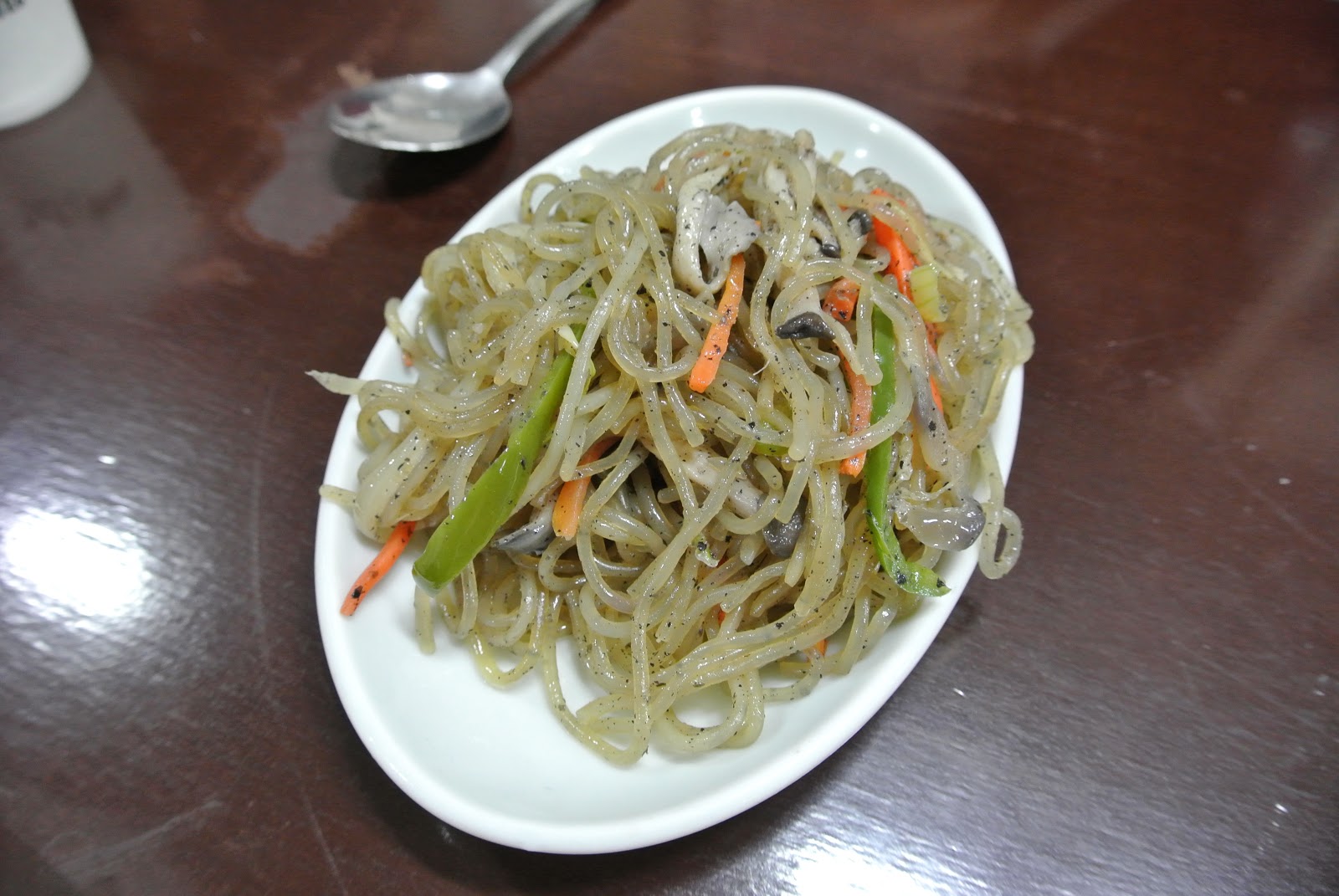
Second, the food in Korea is generally much cheaper (and healthier) than in Hawaii. I personally think the food in Korea is a lot better, too! A few of my favorites include 밭빙수 (red bean shaved ice), 삼겹살 (sam gyeop sal or pork belly), 김밥 (kimbap or korean sushi), 떡볶이 (ddukbokki or spicy rice cake), and 부대찌개 (stew with variety of foods inside like rice cake, pork, vegetables, ramen, etc.). Of course there are many others but it would take forever to name them all!

That brings me to the next thing: dining out in Korea. Whether it's in a restaurant or just having coffee and dessert at a cafe, there are a few things that are useful to know:
  1.  No tax and tip! This is by far my favorite part of eating out in Korea. Nobody tips in Korea and the prices are usually set by even amounts like 7,000 won or 9,500 won. It is very convenient because you don't need to go through the trouble or calculating tax and tip :)
  2.  In restaurants, you usually pay at the cash register near the door after you are finished eating. Unlike America, servers here don't pick up your check and payment and return your change to your table. (Probably because there's no such thing as tipping here.)
  3. When you need something just yell out "저기요" (cheogiyo) or "여기요" (yeogiyo) or just get their attention somehow. Servers don't usually come to your table every so often to check up on you like in the U.S. (This too is probably because of no tipping in Korea.)
  4. I'm not too sure about this one but from my own experience, sometimes when you order just one item to share with a friend they won't let you get just one order. They will ask you to get 2 or however many people are in your party. This is probably because the menu items are set for one person serving size. However, some menus will indicate how many persons each item can feed. Keep in mind that this doesn't happen everywhere; I just had this happen to me and my friends a few times. 
  5. For cafes, you will usually order your food and/or drink at the counter and they will give you your order on a tray (if you are going to sit in the cafe). When you are finished, you either bring the tray with your rubbish back to the workers or leave it on top of the designated trash area. In certain places, you can just leave it on the table and someone will clean it up later. The reason is because Korea is very big on recycling and everyone separates their trash into plastics, papers, and other waste. They don't want you to just dump everything into one trashcan. (Many places have slightly different ways of disposing of your trash so just keep that in mind.)
    •  In my personal experience, the first time I went to a cafe here in Korea with my friends, we were unsure of what to do with our trash once we were done enjoying our coffee and pastries. There were not many other people in there at the time so we couldn't just follow what other people were doing. And the people who were there did not look like they were going to be done anytime soon. We were checking out the area where you get your straws, napkins, and sugars because that's where the trash is usually located but there was no slot to dispose of our rubbish. We were confused for the longest time and after trying to read the sign taped to the 'trash can' that said something that included "...after drinking..." in Korean, we decided to leave the whole tray on top of that 'trash can'. It seemed to be correct because the worker there just said their goodbye greetings as we left.
I guess I will end it here for now (before this post gets way too long)! I will probably blog more about Korean customs and etiquette in later posts. :)

Until next time~ 


Sunday, August 12, 2012

Quick update + wiring money

So there are about 5 days left until I depart for Korea and I am super excited!! Unfortunately, I got sick earlier this week which was the last thing I wanted since I was already stressing over last-minute preparations for Korea. I am feeling a little better now but hopefully I will be fully recovered by the time I leave for Korea.

In my first post, I briefly mentioned the topic of wiring money and how simple the process really is. However, I will go into more detail now about how to wire money and how the process works. For Korea University, the only way for international students to make payments for dorm fees is through wire transfer (unless for some reason you are already in Korea before the payment deadlines). If you are someone like me who has never done wire transfers until now will most likely be confused with this process. When you wire money from one place to another, you are basically sending money from one bank account to another. For example, when I paid for my dorm fees I had to transfer money from my personal bank account into a bank account at KU that is specifically linked to my student account so that the money gets credited to the right person. So how exactly do you wire money? Well, the easiest way is to go to whichever bank you have an account with and ask the teller to do a wire transfer for you. However, you need to be sure you have the appropriate information with you when you go to the bank. You will need to provide:

1. the name of the bank you are sending to,
2. address of the bank you are sending to,
3. SWIFT code,
4. account number that you are sending to,
5. and the name of the beneficiary.
(These were all included on my billing statement from KU so all I needed to do was print it out and show the bank teller.)

In addition, the bank will charge you a wire transfer fee on top of the amount you are planning to send (I have an account with First Hawaiian Bank and their fee is $50).

The main reason I wanted to add this explanation on wire transfers is because I experienced some bumps in the road when I did it and I hope you will not make the same mistake that I did. The biggest thing to keep in mind when doing wire transfers is how much money will actually reach the final destination. Many people do not realize that the sum of money you send out will actually shrink by the time it gets to its destination. This is because your money is sent through one or more Pay Through Banks before it reaches its final destination. Each Pay Through Bank that your money passes through will take out a small amount as a transfer fee. There really is no exact science to calculating how much money you should send out so the best thing to do is to convert your money and then round up by a substantial amount. It is really up to your own instincts! Remember to look up the most current exchange rate or use a currency exchange app!

When I did my first wire transfer for my dorm deposit of 200,000 won, everything went smoothly and I only overpaid by a mere 882 won (which equals to roughly 80 cents)! Unfortunately when I paid for my dorm fee, I guess I miscalculated and I underpaid by about 42,000 won. I checked my housing account online and despite the status showing 'Dorm Fees paid', I was worried that my room reservation would be canceled due to my outstanding 42,000 won. (The housing contract states that any rooms not paid before the deadline would be automatically canceled.) Because I did not want to risk becoming homeless in Korea, I rushed to the bank as soon as I could and did another wire transfer which cost me an extra $50 that I could have avoided if I had calculated correctly the first time.

That is all for now!